
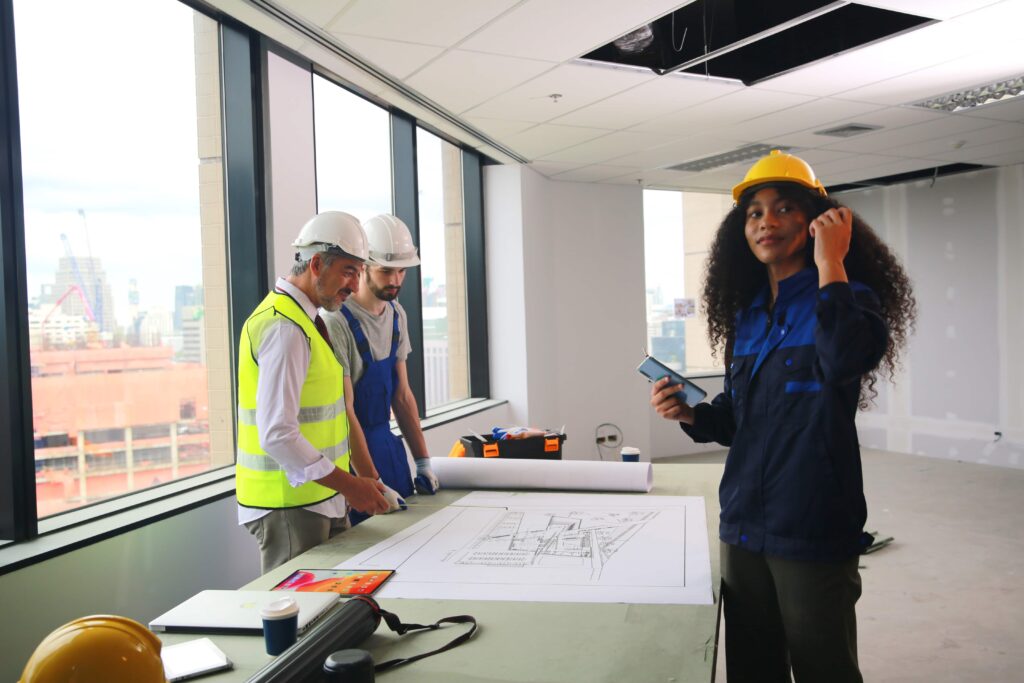
Across Leeds and the wider UK construction market, modern buildings rely on specialised systems that enable daily operations from restaurant kitchens and hospitals to data centres and manufacturing facilities. At the core of these developments is commercial equipment installation, a phase that directly impacts building performance, safety, and long-term operational cost.
The successful delivery of commercial projects depends on accurate planning, coordinated execution, and reliable cost forecasting. Estimation is not limited to the price of equipment alone; it also accounts for transport logistics, structural requirements, utility connections, sequencing, and long-term maintainability. For this reason, disciplined quantity data supported by Fast Estimator outputs and a well-prepared takeoff process sit at the centre of informed decision-making.
What Is Commercial Equipment Installation?
Commercial equipment installation involves the placement, fixing, and commissioning of specialised equipment within commercial and institutional buildings. This includes both standalone items and fully integrated systems that support core business operations.
Typical examples include:
- Restaurant kitchen equipment and extract systems
- HVAC units, chillers, and air-handling systems
- Lifts, escalators, and goods hoists
- Laundry, sterilisation, and medical equipment
- Manufacturing and processing machinery
- IT racks, UPS systems, and data centre infrastructure
Each category presents unique load constraints, clearance requirements, and service demands, all of which must be reflected accurately within early-stage estimation and takeoff documentation.
Why Estimation Matters in Commercial Equipment Installation
Unlike general finishes or fit-out elements, commercial equipment is high-value, high-risk, and heavily coordinated. Errors at the estimation stage can lead to structural alterations, redesigns, or delays during testing and commissioning.
Accurate estimation using Fast Estimator data enables:
- Budget certainty before procurement
- Clear coordination between architectural, structural, and MEP trades
- Reliable BOQs supported by measurable quantities
- Reduced risk during lifting and installation operations
- Early identification of electrical, drainage, gas, and ventilation requirements
For Leeds-based projects particularly within tight city-centre sites precise forecasting is essential to maintain programme and cost control.
The Role of Takeoffs in Commercial Equipment Planning
A detailed takeoff provides the quantitative foundation for commercial equipment estimation. It converts drawings and models into measurable scope that supports procurement, scheduling, and risk planning.
For commercial equipment installation, a takeoff typically includes:
- Quantity and type of equipment units
- Structural bases, plinths, or inertia pads
- Electrical, gas, water, and data connection points
- Ventilation and extract ductwork lengths
- Fixings, anchors, and support frames
- Allowances for rigging, hoisting, and site logistics
These takeoffs feed directly into BOQs and Fast Estimator cost models, ensuring figures are based on verified data rather than assumptions.
Integration with BOQs and Cost Models
Bills of Quantities remain a critical tool in UK cost management. When commercial equipment installation quantities are captured accurately, BOQs evolve into strategic control documents rather than simple checklists.
Effective integration supports:
- Transparent tender comparisons
- Clear separation of equipment supply and installation costs
- Supplier and subcontractor price analysis
- Cash-flow forecasting aligned with delivery schedules
- Efficient change management when specifications are revised
In Leeds projects, where design development often continues during construction, strong takeoff data allows cost updates without destabilising the overall budget.
Digital Methods and Model-Based Coordination
Digital workflows have significantly improved commercial equipment installation planning. BIM and model-based takeoffs now allow teams to coordinate equipment placement alongside building services and structure.
Digital methods enable:
- Clash detection between equipment, structure, and services
- Visual validation of access and maintenance clearances
- Automated quantity extraction
- Integration with programme sequencing and delivery planning
- Asset data capture for facilities management
These tools are particularly valuable in multi-storey commercial developments common across Leeds’ expanding business districts.
Key Cost Drivers in Commercial Equipment Installation
Several factors influence total installation cost beyond equipment procurement:
- Structural modifications or additional steelwork
- Utility capacity upgrades
- Craneage and specialist lifting operations
- Testing, commissioning, and certification
- Restricted access and internal transport limitations
- Regulatory and compliance requirements
Capturing these drivers within Fast Estimator-supported takeoffs ensures realistic forecasting and reduces exposure to cost overruns.
Safety, Compliance, and UK Regulations
Commercial equipment installation in Leeds must comply with UK statutory and local authority requirements, which directly affect both planning and cost.
Key considerations include:
- Fire safety and ventilation standards
- Environmental health requirements
- Electrical and mechanical regulations
- Noise, vibration, and emissions controls
- Lifting operations and site safety legislation
Estimators must ensure adequate allowances are included for approvals, inspections, and compliance-related activities.
Data, Analytics, and Performance Insight
Modern estimation platforms convert historical installation data into actionable insight. By analysing completed projects, teams can benchmark:
- Cost per item by building type
- Installation productivity rates
- Typical lifting and access allowances
- Maintenance and lifecycle replacement trends
For developers and asset owners, this transforms commercial equipment installation from a one-off cost exercise into a long-term performance strategy.
The Future of Commercial Equipment Installation
The industry is moving toward fully integrated, data-driven delivery models. Future developments include:
- AI-assisted equipment identification from drawings and BIM models
- Automated takeoffs linked to manufacturer specifications
- Digital twins for commissioning and maintenance
- Predictive lifecycle cost modelling
- Increased use of off-site fabrication and modular plant rooms
In Leeds’ growing construction market, these advancements will support safer installations, improved cost certainty, and faster project handover.
Conclusion
Commercial equipment installation is a critical link between design intent, technical performance, and operational readiness. Its success depends on accurate estimation, structured takeoffs, and coordinated planning supported by Fast Estimator data.
By combining digital modelling, analytics, and well-structured BOQs, project teams can reduce risk, maintain budget control, and deliver facilities that perform efficiently from day one. In Leeds, UK where programme pressure and space constraints are increasing precision in estimation is not optional; it is essential for project success.