
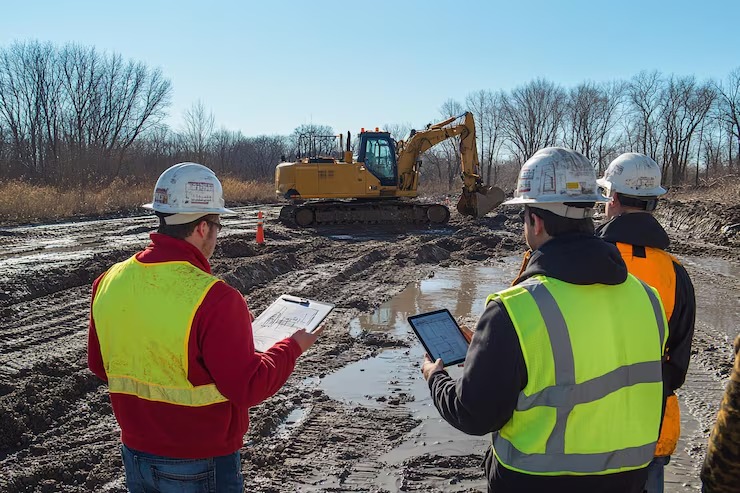
Below-ground works often determine whether a construction project progresses smoothly or encounters delays and cost overruns. In the UK, where underground environments are increasingly congested and access can be restricted—particularly in urban areas accurate trenching and backfilling estimates are critical to early-stage cost planning and constructability decisions.
Utilities, foundations, drainage systems, and service connections all depend on precise excavation and reinstatement. Errors in estimating these activities can result in insufficient allowances for labour, plant, disposal, or surface restoration issues that are costly and disruptive to resolve once construction is underway. Accurate trenching and backfilling estimates are therefore essential for maintaining budget control and programme certainty on UK projects, Fast Estimator.
Understanding Trenching and Backfilling in Construction
Trenching and backfilling are fundamental civil engineering activities involving the excavation of narrow, linear trenches followed by the placement and compaction of material to restore ground conditions. These works support:
- Utility installations (water, foul drainage, gas, electricity, telecoms)
- Surface water and drainage systems
- Foundation footings and ground beams
- Service connections and duct banks
Because trenching works are typically carried out at the start of the construction sequence, their cost and duration directly influence subsequent trades. Reliable trenching and backfilling estimates ensure projects begin on a solid technical and financial foundation.
Why Trenching and Backfilling Estimates Matter in the UK
UK construction sites present a range of challenges that directly affect excavation works, including:
- Congested existing underground services
- Restricted space for spoil storage
- Highway authority requirements for excavation and reinstatement
- Traffic management and working-hour limitations
- Variable ground conditions, including made ground and groundwater
In this environment, generic excavation rates rarely reflect reality. Trenching and backfilling estimates must be based on measured quantities, site constraints, and regulatory requirements to avoid unexpected cost escalation, Fast Estimator.
The Role of Takeoffs in Trenching and Backfilling Estimates
A disciplined takeoff is the foundation of accurate trenching and backfilling estimation. Excavation and reinstatement costs are volume-driven, and small measurement errors can translate into significant budget differences.
A typical trenching and backfilling takeoff prepared by Fast Estimator includes:
- Trench lengths by utility or service type
- Trench widths and excavation depths
- Total excavation volumes
- Bedding and surround material quantities
- Backfill volumes by material type
- Surface reinstatement areas (tarmac, concrete, block paving)
These takeoffs feed directly into Bills of Quantities (BOQs) and cost plans, ensuring trenching and backfilling estimates are based on defined scope rather than assumptions.
Key Cost Drivers in Trenching and Backfilling
Several factors significantly influence trenching and backfilling estimates on UK projects:
- Soil conditions, including rock, clay, or contaminated ground
- Groundwater presence and dewatering requirements
- Excavation depth and associated safety measures
- Type of backfill material, such as structural fill or recycled aggregate
- Compaction standards and testing requirements
- Reinstatement specifications set by local authorities
Accurate estimation identifies these drivers early, allowing teams to manage risk and plan mitigation strategies.
UK-Specific Excavation Challenges
In the UK, trenching works often require careful coordination with multiple stakeholders. Estimators must account for:
- Utility protection and diversion works
- Permits and approvals from local authorities
- Limited working space in urban environments
- Disposal or reuse of excavated material
- Reinstatement of pavements, roads, and landscaped areas
These factors have a direct impact on productivity and cost. Reliable trenching and backfilling estimates include realistic allowances for coordination, inspections, and compliance activities.
Labour, Plant, and Productivity Considerations
Labour and plant costs represent a significant portion of trenching and backfilling budgets. Productivity varies depending on access, trench depth, and site congestion.
Effective estimates consider:
- Excavation method (machine excavation versus hand digging)
- Plant selection and utilisation
- Safety measures such as trench support systems
- Crew size, sequencing, and site conditions
By linking productivity assumptions directly to measured quantities, Fast Estimator produces realistic and defensible cost forecasts.
Integration with BOQs and Project Controls
Structured BOQs play a vital role in managing excavation scope. When developed from accurate takeoffs, BOQs enable:
- Clear separation of excavation, bedding, and backfill items
- Transparent tender comparisons
- Accurate valuation of variations
- Progress tracking based on installed volumes
For UK infrastructure and public-sector projects, this level of clarity supports governance, compliance, and audit requirements.
Digital Tools Supporting Trenching Estimates
Digital estimation tools have transformed how trenching and backfilling estimates are produced. Civil design software and BIM platforms allow quantities to be extracted directly from coordinated models.
Digital workflows support:
- Automated volume calculations
- Visual validation of trench alignments
- Rapid updates when designs change
- Coordination with drainage and utility layouts
On complex UK projects, digital takeoffs help maintain control over cost and scope throughout design development.
Risk and Contingency Planning
Trenching works carry higher levels of uncertainty compared to many other construction activities. Common risks include:
- Unforeseen utilities or obstructions
- Unsuitable or unstable ground conditions
- Groundwater ingress
- Weather-related delays
Effective contingency planning ties these risks to specific takeoff assumptions rather than generic allowances, improving predictability and cost control.
Sustainability and Material Reuse
Sustainability considerations increasingly influence trenching and backfilling estimates in the UK. Estimators may evaluate:
- Reuse of excavated material where feasible
- Reduction of imported fill
- Minimising disposal and haulage distances
Accurate takeoffs allow teams to assess both cost and environmental impact, supporting more sustainable construction practices.
The Future of Trenching and Backfilling Estimation
The future of trenching and backfilling estimation is increasingly data-driven, with emerging trends including:
- AI-assisted identification of trench routes in models
- Automated takeoff generation from civil BIM data
- Predictive analytics for soil and productivity risk
- Integration of cost, programme, and environmental metrics
These advancements will further reduce uncertainty in early-stage planning for UK construction projects.
Conclusion
Trenching and backfilling estimates are a foundational element of construction cost planning across the UK. Because these works underpin utilities, foundations, and infrastructure, accuracy at the estimating stage is essential.
By grounding estimates in disciplined takeoffs, structured BOQs, and digital workflows, Fast Estimator helps project teams manage risk, control costs, and maintain programme certainty. In the UK’s increasingly congested underground environment, precision in trenching and backfilling estimation is not optional—it is essential for successful project delivery.