
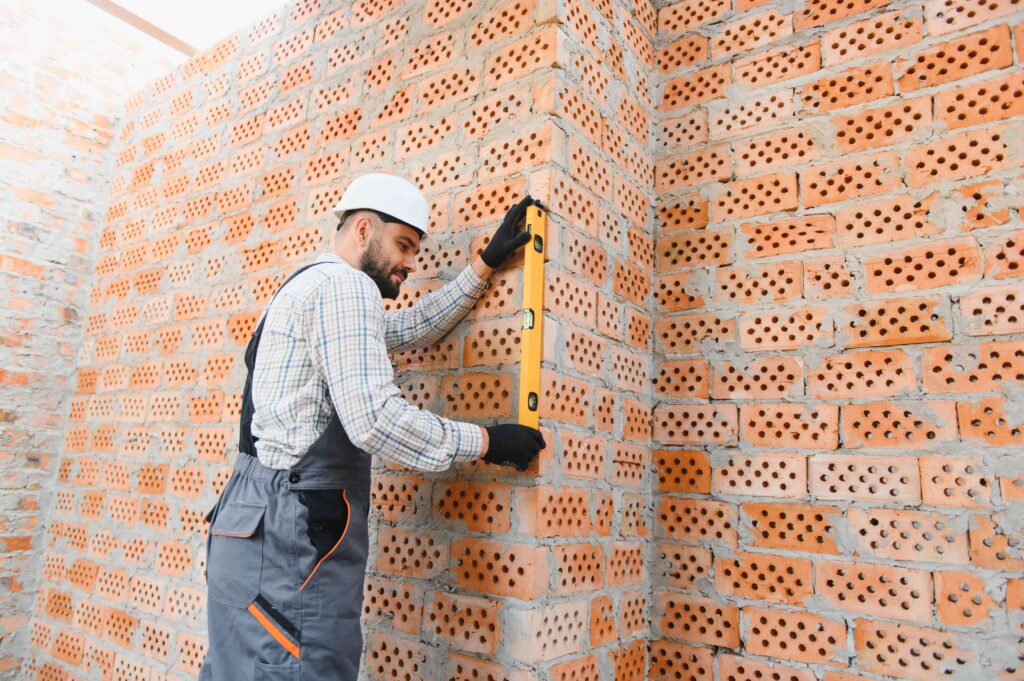
Masonry Estimates: Building Data-Driven Accuracy in Leeds, UK Construction Projects
Masonry work forms the backbone of Leeds, UK’s architectural identity from timeless heritage buildings to modern commercial complexes. Behind every successful structure lies a foundation of precise planning, and that begins with accurate masonry estimates.
In an environment where costs, materials, and timelines converge, masonry estimation isn’t just a calculation exercise it’s a strategic process that combines field experience, digital data, and cost modeling. For estimators, project managers, and contractors, mastering this process through Fast Estimator ensures efficient resource allocation, cost transparency, and seamless execution across every phase of construction.
Understanding Masonry Estimates
Masonry estimates involve calculating the total material, labor, and equipment costs required for masonry construction, including brickwork, blockwork, stone cladding, and mortar applications. In essence, it’s the financial and quantitative blueprint that guides project planning and budgeting.
A reliable masonry estimate doesn’t only reflect the visible materials it also accounts for hidden variables like waste factors, curing times, transportation, scaffolding, and surface preparation. For projects in Leeds UK, where space constraints and compliance regulations add complexity, precision becomes even more critical.
Modern estimation methods combine traditional craftsmanship insights with data-driven modeling to deliver forecasts that are both accurate and adaptable to changing market conditions.
The Role of Masonry Estimates in BOQs
The Bill of Quantities (BOQ) serves as the cornerstone of project costing. Masonry estimates feed directly into BOQs, ensuring that every block, brick, and joint is captured with corresponding unit rates and specifications.
In a city like Leeds UK, where construction costs can vary significantly across districts, linking masonry estimates to BOQs enables consistent cost tracking and transparent reporting. This integration allows:
- Better Budget Control: Quantities and rates are defined clearly, reducing disputes during execution.
- Streamlined Procurement: Material takeoffs derived from masonry estimates ensure timely and accurate ordering.
- Data Consistency: Estimation data aligns across teams, minimizing discrepancies between drawings and field execution.
Incorporating masonry estimates into standardized BOQs also simplifies tendering and contractor evaluation ensuring that bids are comparable and based on accurate data.
Data-Driven Masonry Estimation
The evolution of construction estimation has been powered by data. By integrating masonry estimates with Fast Estimator and analytics platforms, estimators can forecast project costs more intelligently and identify trends that influence pricing and productivity.
For example, in Leeds UK projects, data can help track material costs such as concrete blocks, natural stone, or brick prices, all of which fluctuate due to market demand or import factors. Historical data also provides insights into labor efficiency how many square feet of masonry work can be completed per labor hour under specific site conditions.
Digital estimation platforms allow professionals to:
- Automate calculations for wall areas and material volumes.
- Link estimates with up-to-date supplier price databases.
- Analyze cost performance using dashboards and predictive analytics.
The result is an estimation model that evolves in real time, providing actionable insights that strengthen decision-making and reduce uncertainty.
The Integration of Digital Tools in Masonry Takeoffs
Just as with electrical and metal estimation, masonry takeoffs have been revolutionized by digital tools. Software such as PlanSwift, Bluebeam, and CostX enables estimators to perform visual takeoffs from CAD drawings and BIM models with precision.
These platforms enhance the efficiency of masonry estimates by:
- Reducing Manual Errors: Automated measurements minimize discrepancies in wall dimensions and mortar volumes.
- Enhancing Collaboration: Teams can review takeoff data simultaneously, ensuring alignment.
- Standardizing Workflows: Templates allow uniform cost breakdowns across multiple projects.
- Linking to BOQs: Takeoff quantities can be directly exported into structured BOQ formats for tendering or cost tracking.
In Leeds UK, where construction sites often involve high-density urban layouts, digital takeoff tools streamline communication between estimators, architects, and contractors saving both time and capital.
Strategic Insights from Masonry Estimation Data
Masonry estimation is not just about numbers; it’s about insights. When analyzed over multiple projects, masonry estimate data reveals performance benchmarks that can guide future decision-making.
For instance, data might show that certain block types or mortar ratios perform better in specific Leeds UK climate conditions, or that labor efficiency improves when prefabricated masonry panels are used. These insights enable construction firms to refine both cost and design strategies.
Additionally, predictive modeling can forecast potential cost escalations or delays, helping teams proactively adjust schedules and budgets. This kind of foresight transforms estimation from a reactive process into a strategic advantage.
Masonry Estimates and Sustainable Construction
Sustainability is reshaping how masonry is estimated and executed. Accurate masonry estimates help contractors plan material usage more efficiently, minimizing waste and ensuring compliance with environmental standards.
In Leeds UK, sustainable masonry practices like using recycled aggregates or low-carbon cement require close cost monitoring. Digital estimation systems like Fast Estimator allow users to compare traditional and eco-friendly material options, highlighting long-term cost benefits alongside environmental impact.
Furthermore, sustainability-focused estimation contributes to achieving certifications such as BREEAM or UK Green Building Standards, positioning firms for future-ready construction.
Overcoming Common Challenges in Leeds UK Masonry Projects
While masonry remains one of the most durable and aesthetic forms of construction, it presents unique estimation challenges in Leeds UK:
- Material Price Volatility: Brick and stone prices fluctuate due to logistics and import factors.
- Site Access Limitations: Urban constraints can impact productivity and increase labor hours.
- Regulatory Compliance: Leeds building codes and safety mandates add layers of cost consideration.
However, data and digital solutions like Fast Estimator mitigate these issues by offering real-time pricing updates, site productivity tracking, and integration with regulatory databases. This ensures that every masonry estimate reflects true field conditions, not theoretical assumptions.
Future Trends in Masonry Estimation
The future of masonry estimates lies in automation, machine learning, and cloud collaboration. Artificial intelligence (AI) can now scan project drawings, perform automated takeoffs, and identify potential cost anomalies within minutes.
As Leeds UK construction firms increasingly adopt cloud-based systems, estimators can access and update data from anywhere enhancing flexibility and transparency. Predictive algorithms will continue to refine cost forecasting by learning from historical project data, while IoT devices on job sites will feed real-time productivity metrics back into estimation systems.
This convergence of data, technology, and analytics will redefine masonry estimation as an ongoing intelligence process rather than a one-time task.
Conclusion
Masonry estimates are far more than cost breakdowns they are data frameworks that shape project success. In Leeds UK’s dynamic construction landscape, precision in masonry estimation translates directly into financial control, efficiency, and design excellence.
By integrating masonry estimates with Fast Estimator, digital tools, BOQs, and data-driven insights, professionals can transform traditional workflows into intelligent systems of accountability and foresight. As Leeds UK continues to evolve architecturally, mastering this estimation process ensures that every brick laid is backed by strategic precision and analytical clarity.