
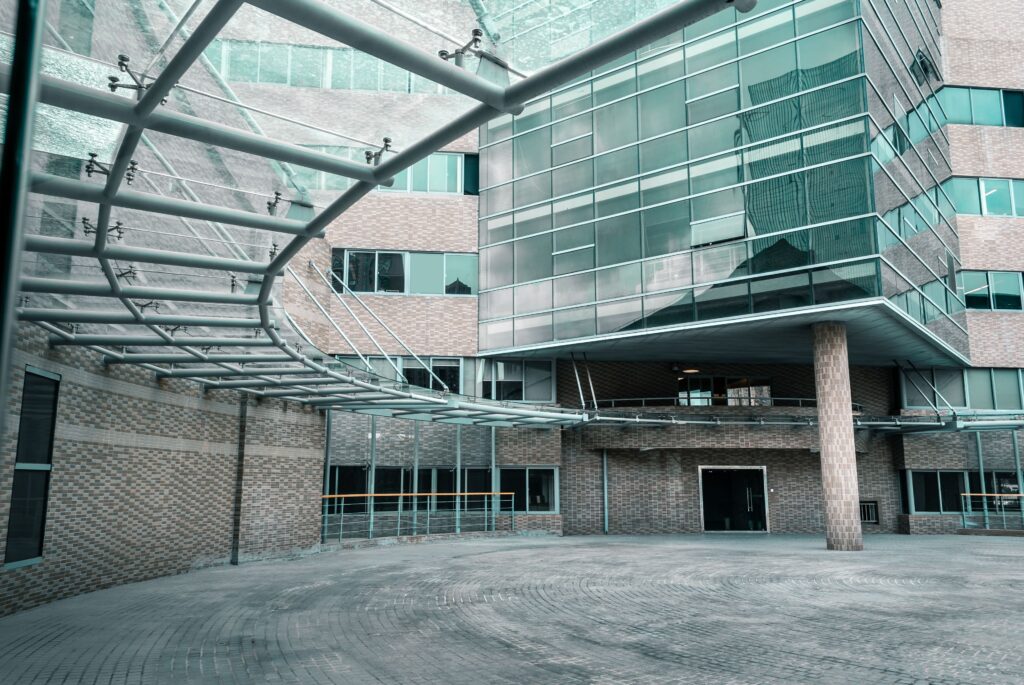
Leeds, UK’s skyline is defined by its facades, brick, stone, glass, metal, and composite finishes that showcase both architectural artistry and engineering discipline. Achieving these complex exteriors requires not only creative design but also meticulous financial and material planning. That’s where exterior finishes estimate comes in.
Accurate estimation of exterior finishes ensures that every detail, from cladding systems and weatherproofing layers to insulation and paint, is accounted for before construction begins. For contractors and developers worldwide, this isn’t just a technical necessity; it’s a strategic tool for managing costs, reducing waste, and maintaining compliance with regional energy and sustainability standards.
Understanding Exterior Finishes Estimates
Exterior finishes estimation is the process of quantifying and costing all materials, labour, and accessories required to complete a building’s outer envelope. This includes façade cladding, stucco, EIFS systems, metal panels, exterior paint, waterproof membranes, and insulation boards.
The purpose of an exterior finishes estimate is twofold: to determine the true cost of façade construction and to provide a data-backed basis for project scheduling and procurement.
In global construction environments, exterior finishes estimation is critical due to the variety of façade materials used and the logistical complexities of installation in urban or confined spaces. Estimators must evaluate not only material quantities but also access requirements, scaffolding costs, and local labour rates, all of which can significantly influence the bottom line.
The Connection Between Exterior Finishes Estimates and BOQs
A well-prepared Bill of Quantities (BOQ) depends heavily on precise exterior finishes estimates. BOQs serve as the financial backbone of project planning, outlining every itemised component with standardised measurement and costing.
When exterior finishes data is integrated into BOQs, it ensures:
• Consistent Cost Control: Each finish, be it brick veneer, aluminium panelling, or cement render, is priced uniformly across project phases.
• Efficient Procurement: Suppliers receive exact material specifications, reducing waste and reordering delays.
• Design Traceability: Cost data corresponds directly to architectural drawings, simplifying change management.
• Tender Transparency: Bidders can compare costs fairly using the same quantity benchmarks.
For developers worldwide, this alignment between BOQs and exterior finishes estimates allows for greater predictability in both budgets and schedules, especially when dealing with high-rise or mixed-use buildings that require multiple façade systems.
The Role of Digital Technology in Exterior Finishes Estimation
Digital transformation has fundamentally reshaped how estimators approach exterior works. Using advanced take-off and estimation software, professionals can extract quantities from 2D drawings or BIM (Building Information Modelling) environments with remarkable precision.
These platforms, such as CostX, Bluebeam, and Revit-integrated take-off tools, allow estimators to:
- Automate Material Quantities: Calculate cladding areas, joint lengths, and insulation volumes directly from models.
- Incorporate Real-Time Pricing: Link to live supplier databases for materials and finishes.
- Simulate Design Alternatives: Compare the cost and performance impact of various exterior systems.
- Sync with Project Schedules: Align take-off data with construction timelines and resource planning.
On projects where design revisions are frequent and compliance with façade performance standards is mandatory, these digital tools ensure that exterior finishes estimates remain accurate and responsive to design evolution.
Data Insights and Predictive Estimation
Data-driven estimation is transforming how construction professionals evaluate exterior finishes. By analysing historical project data, estimators can predict cost trends for specific materials and climates, improving both pricing accuracy and risk assessment.
For instance, data from previous projects can reveal patterns such as:
• Seasonal fluctuations in the cost of façade cladding materials.
• Labour productivity variations depending on building height and accessibility.
• The long-term maintenance impact of certain coatings or finishes.
When this information is integrated into modern estimation platforms, exterior finishes estimates evolve from static spreadsheets into intelligent forecasting systems. These insights allow project managers to make informed decisions about design durability, budget allocation, and sustainability.
Sustainability and Exterior Finishes
Sustainability is reshaping how façades are designed and estimated. Exterior finishes play a crucial role in energy efficiency, building envelope performance, and environmental compliance.
Accurate exterior finishes estimates ensure that green materials, like low-emission coatings, recycled aluminium panels, or high-performance insulation, are budgeted appropriately. They also help contractors compare life cycle costs between conventional and sustainable systems, highlighting long-term savings through energy reduction and durability.
In cities with strict building emissions standards, such estimation accuracy directly influences compliance strategies. Data-driven BOQs also facilitate documentation for LEED and other green certifications, providing both cost transparency and sustainability accountability.
Integration of Exterior Finishes Estimates with Project Data
Exterior finish estimation is most effective when it’s part of a larger data ecosystem. Integrating take-offs and estimates into centralised project management systems allows teams to maintain version control, link cost updates to design revisions, and share progress across stakeholders.
In practice, this means:
• Dynamic BOQs: Estimates that automatically adjust as design models evolve.
• Linked Procurement: Direct data exchange between estimation and purchasing departments.
• Performance Feedback Loops: Comparing actual consumption and costs with initial estimates for future optimisation.
For global projects, where collaboration between architects, engineers, and contractors is constant, this data connectivity ensures consistency from concept to completion.
Challenges and Solutions in Exterior Finishes Estimation
Estimating exterior finishes for international projects involves challenges unique to location, logistics, and regulation:
• Variable Material Costs: Imported façade materials fluctuate with currency and supply chain shifts.
• Access Limitations: Tight job sites require additional installation logistics and safety measures.
• Regulatory Compliance: Fire resistance, weatherproofing, and energy codes affect material selection and costing.
• Weather Sensitivity: Seasonal temperature changes influence installation timelines and productivity.
Digital workflows and robust data integration help address these challenges. By linking exterior finishes estimates to live cost databases, labour analytics, and scheduling tools, estimators can maintain flexibility while ensuring precision under dynamic conditions.
Future Trends in Exterior Finishes Estimation
The future of exterior finishes estimation is defined by automation, sustainability, and AI-enhanced modelling. Artificial intelligence now assists estimators by automatically identifying façade components from digital blueprints, calculating surface areas, and generating cost breakdowns.
Cloud-based systems facilitate collaboration between design and estimation teams, while machine learning algorithms refine predictions based on real-world outcomes. In addition, augmented reality (AR) tools are emerging to visualise exterior finishes on-site, validating both design intent and cost assumptions before installation.
These technologies position exterior finishes estimates as not just a planning function but a strategic intelligence system that drives smarter, faster, and greener construction.
Conclusion
In the evolving construction landscape, exterior finishes estimates are more than a technical requirement; they are a strategic foundation for cost control, sustainability, and design excellence.
By combining data analytics, digital modelling, and integration with BOQs, estimators can transform façade planning into a transparent, efficient, and intelligent process. Every exterior surface, whether glass, metal, or stone, becomes part of a measurable system that supports accuracy and accountability.
As construction worldwide continues to evolve, precision in exterior finishes estimation will remain the cornerstone of both architectural ambition and economic success.