
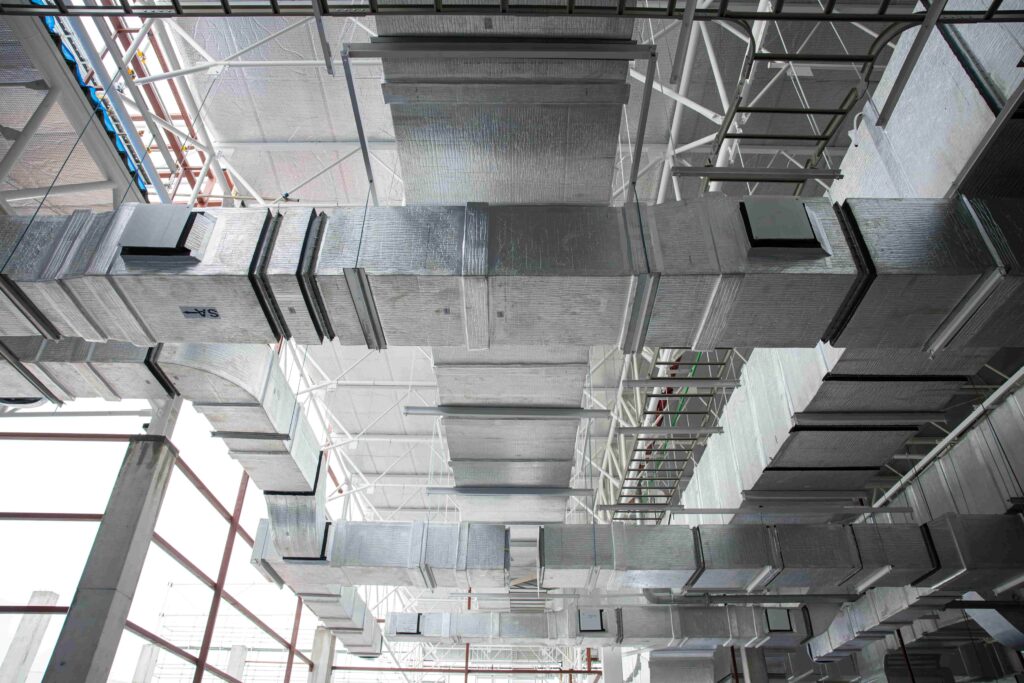
In modern buildings, ductwork is the backbone of air distribution. It determines how efficiently heating and cooling systems operate, how comfortable occupants feel, and how effectively energy performance targets are achieved. Across the UK construction sector, duct cost estimation plays a critical role in HVAC planning, directly influencing budgets, coordination, and long-term operational efficiency.
Although duct systems are typically concealed above ceilings or within service risers, they represent a substantial portion of mechanical costs. Errors in duct cost estimation often emerge late in the construction phase, when access issues, coordination clashes, or missing quantities lead to delays and variations. A structured approach supported by accurate takeoffs and the expertise of Fast Estimator is essential for achieving cost certainty.
What Is Duct Cost Estimation?
Duct cost estimation is the process of calculating the total cost associated with supplying, fabricating, installing, and commissioning HVAC ductwork systems. This includes materials, accessories, insulation, labour, and installation logistics.
Typical elements included in duct cost estimation are:
- Supply, return, and extract ductwork
- Duct sizes by material, pressure class, and specification
- Fittings, bends, transitions, and volume control dampers
- Fire and smoke dampers
- Thermal and acoustic insulation
- Hangers, supports, and bracing systems
Each component must be measured and priced accurately to reflect the true scope of the HVAC system.
Why Duct Cost Estimation Is Challenging in the UK
UK construction projects present unique challenges that directly affect duct cost estimation. Buildings often feature tight ceiling voids, complex layouts, and stringent regulatory requirements.
Key UK-specific challenges include:
- Multi-storey vertical distribution and riser coordination
- Congested ceiling zones shared with electrical and plumbing services
- Strict fire safety, smoke control, and energy efficiency regulations
- Restricted access during refurbishment or occupied-building projects
- Productivity variations due to site conditions and sequencing
Because of these factors, duct costs cannot be reliably estimated using generic area-based rates. Detailed takeoffs and realistic installation assumptions are essential, Fast Estimator.
The Role of Takeoffs in Duct Cost Estimation
A detailed takeoff is the foundation of accurate duct cost estimation. Ductwork quantities are driven by linear measurements, cross-sectional sizes, and fitting complexity, making precision critical.
A comprehensive ductwork takeoff typically includes:
- Linear duct lengths by size and pressure class
- Quantities of fittings such as elbows, offsets, and reducers
- Dampers, access panels, and specialist components
- Insulation areas by thickness and performance requirement
- Hangers, supports, and restraint systems
Fast Estimator uses disciplined takeoff methodologies to ensure these quantities feed directly into Bills of Quantities (BOQs), supplier pricing, and labour calculations.
Key Cost Drivers in Duct Systems
Several variables strongly influence duct cost estimation in UK projects:
- Duct size and pressure rating, affecting metal thickness and fabrication
- System type, including supply, extract, or smoke control systems
- Fabrication approach, whether shop-fabricated or site-modified
- Installation height and access constraints
- Insulation and fire-rating requirements
- Coordination complexity, particularly in retrofit projects
Identifying these drivers early allows project teams to manage risk and optimise design decisions, Fast Estimator.
Sheet Metal Fabrication and Cost Impact
Fabrication is a major component of duct system costs. The level of prefabrication, segmentation, and quality requirements can significantly affect pricing.
Reliable duct cost estimation accounts for:
- Sheet metal gauge and material type
- Degree of off-site fabrication versus site assembly
- Transport, lifting, and handling requirements
- Quality assurance and testing standards
Fast Estimator aligns fabrication quantities with installation strategies to minimise waste and rework.
Labour Productivity and Installation Complexity
Labour often represents a significant share of duct system costs. Productivity varies depending on routing complexity, working height, and coordination with other trades.
Accurate estimation considers:
- Straight runs versus congested or offset duct routes
- Frequency of fittings and system transitions
- Coordination with electrical containment and pipework
- Access limitations in refurbishment or live environments
Linking labour allowances directly to measured quantities improves cost reliability.
Integration with BOQs and Cost Control
Bills of Quantities are essential for managing ductwork scope and costs. When derived from accurate takeoffs, BOQs provide:
- Clear separation of duct systems and sizes
- Transparent tender evaluation
- Efficient variation and change management
- Progress tracking based on installed quantities
For large commercial and public-sector UK projects, this structured approach supports strong financial governance, Fast Estimator.
Digital Tools Enhancing Duct Estimation
Digital workflows have transformed duct cost estimation. BIM and coordinated MEP models allow Fast Estimator to generate precise takeoffs directly from design data.
Digital tools enable:
- Automated extraction of duct quantities
- Differentiation by system and specification
- Early clash detection
- Rapid updates when layouts change
These tools are particularly valuable on UK projects where coordination and revisions are frequent.
Energy Performance and Regulatory Compliance
UK energy and fire safety regulations significantly influence duct design and cost. Estimation must account for:
- Insulation thickness and thermal performance
- Air leakage class requirements
- Fire-rated and smoke control duct sections
Accurate takeoffs ensure all compliance-driven elements are fully included, avoiding unexpected costs during construction.
Risk and Contingency Planning
Duct systems carry specific risks that must be reflected in cost planning, including:
- late design changes affecting routing
- ceiling coordination conflicts
- access or sequencing delays
- material price fluctuations
Fast Estimator ties contingency allowances to quantified takeoff assumptions rather than broad, undefined contingencies.
Lifecycle Considerations in Duct Cost Planning
Effective duct cost estimation considers long-term performance as well as installation cost. Lifecycle factors include:
- Maintenance access and inspection points
- Durability of materials and coatings
- Flexibility for future system modifications
Accurate takeoffs support better lifecycle planning and asset management.
The Future of Duct Cost Estimation
Duct cost estimation is becoming increasingly data-driven, with emerging trends such as:
- AI-assisted quantity recognition from BIM models
- Automated takeoff generation from live design data
- Predictive labour productivity analysis
- Integration of cost, energy, and carbon modelling
These advancements will continue to improve accuracy and predictability for HVAC projects across the UK.
Conclusion
Duct cost estimation is a critical element of HVAC planning in UK construction projects. Because ductwork is space-sensitive, labour-intensive, and highly coordinated, accuracy at the estimating stage is essential.
By relying on detailed takeoffs, structured BOQs, and digital workflows, Fast Estimator helps project teams control costs, improve coordination, and reduce risk. In the UK’s demanding construction environment, precise duct cost estimation is not just a technical task it is a key driver of project success.