
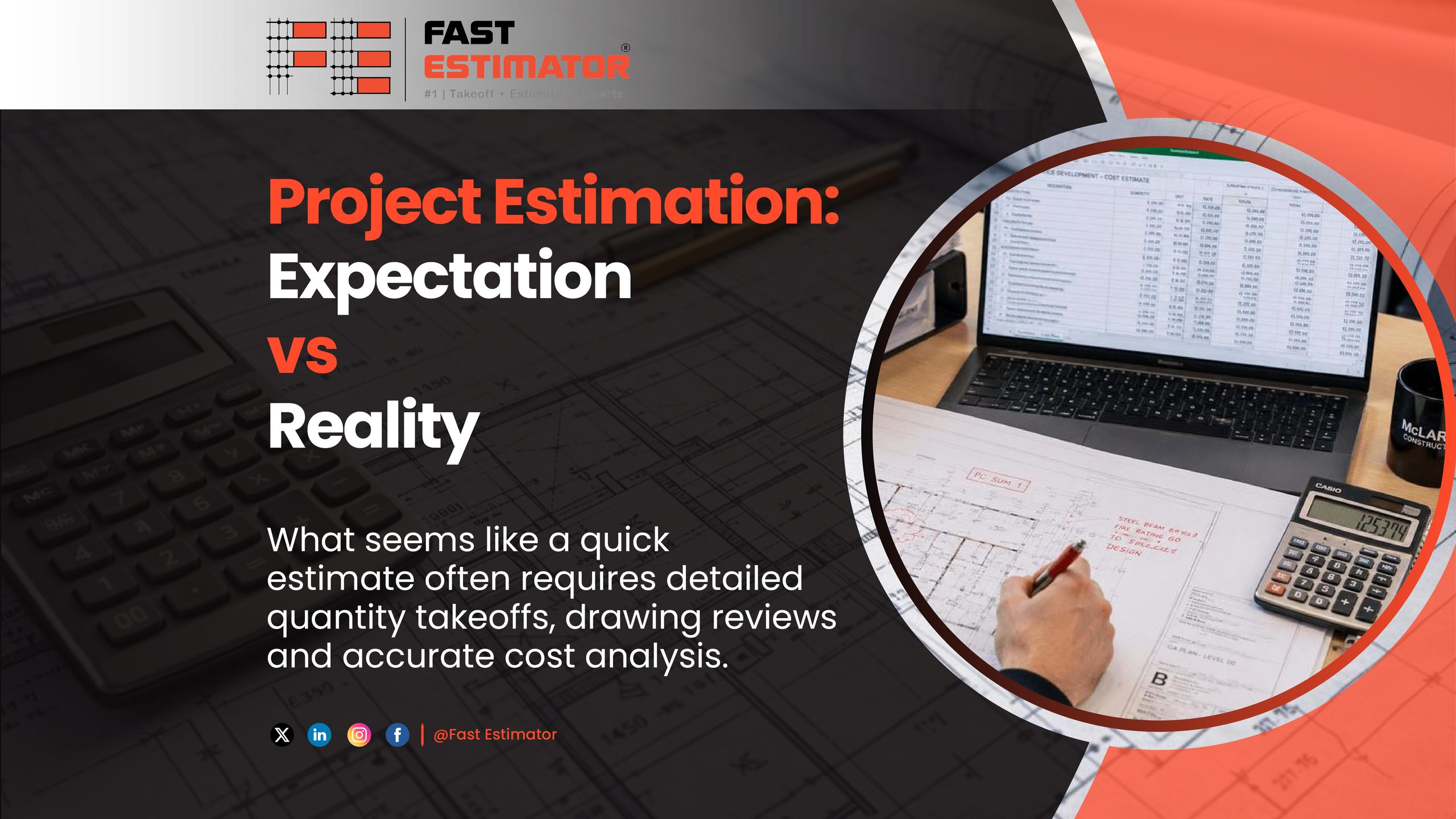
Project Estimation: Expectation vs Reality in Construction
A construction project may look straightforward on paper, but producing a reliable estimate involves far more than adding up a few material prices. Behind every dependable construction budget are detailed quantity takeoffs, drawing reviews, labour calculations, supplier pricing and careful cost analysis.
The difference between expectation and reality often becomes clear when a contractor starts preparing a bid. What initially appears to be a quick task can require hours of technical review to identify the quantities, specifications and costs that influence the final figure.
Construction project estimation is the process of forecasting the quantities, resources and costs required to complete a project. A well-prepared estimate helps contractors price work more confidently, assess financial risks and make informed bidding decisions.
In this guide, we explore why construction estimates take longer than expected, which details can affect their accuracy and how a structured estimating process can improve project budgeting.
Why Does Construction Project Estimation Take Longer Than Expected?
A quick estimate might seem possible when a project has a straightforward design. However, construction drawings often contain multiple disciplines, technical specifications, different material requirements and details that need clarification.
An estimator must review the available information before calculating a realistic project cost. Missing a single scope item can create a gap between the initial estimate and the actual work required.
Common reasons estimating takes longer include:
- Large or complex drawing sets that require detailed review.
- Incomplete, revised or conflicting construction documents.
- Multiple materials, specifications and measurement requirements.
- Changing supplier prices and labour rates.
- Scope items that are easy to overlook.
- Additional checks to identify quantity errors and omissions.
The time required depends on the project’s size, complexity, documentation and level of detail. Taking sufficient time to review these factors can help reduce avoidable mistakes later.
Construction Estimation: Expectation vs Reality
The expectation is often simple: review the drawings, calculate the quantities, apply the rates and submit the bid.
The reality is a more structured process.
1. Expectation: Drawings Are Easy to Understand
Reality: Drawings need careful interpretation.
Construction drawings communicate dimensions, layouts, materials and technical requirements. However, information may be spread across architectural, structural and services drawings.
An estimator may need to compare plans, elevations, sections, schedules and specifications to understand the complete scope. If a drawing is unclear or a revision conflicts with an earlier document, the issue may need clarification before the estimate can be finalised.
A thorough drawing review helps establish what is included, what is excluded and which items require further information.
2. Expectation: Quantity Takeoffs Are Just Measurements
Reality: Accurate quantity takeoffs require consistency and attention to detail.
A quantity takeoff identifies the materials and quantities needed for the work shown in the project documents. Depending on the project, this may include concrete, reinforcement, masonry, flooring, finishes, roofing and other construction components.
Estimators must apply the appropriate measurement rules, units and assumptions. They also need to account for relevant deductions, openings, waste allowances and project-specific requirements where applicable.
For example, measuring a floor area alone may not capture every related item needed to complete the flooring work. Preparation, skirting, finishing materials and waste allowances may also affect the budget.
A clear takeoff makes it easier to review quantities, compare supplier quotations and identify potential omissions before bidding.
3. Expectation: Material Prices Are Straightforward
Reality: Material costs can vary by supplier, specification and location.
A quantity takeoff provides the basis for pricing, but quantities alone do not establish the final cost. Material specifications, availability, delivery charges, supplier quotations and price validity can all affect the estimate.
Contractors should use relevant, up-to-date pricing information and record important assumptions. Where prices are provisional, that uncertainty should be made clear rather than presented as a confirmed cost.
For UK construction projects, estimates may also need to distinguish between applicable tax treatment, delivery costs and other project-specific charges. These should be handled consistently with the quotation requirements and the contractor’s pricing approach.
4. Expectation: Labour Costs Are Easy to Calculate
Reality: Labour requirements depend on the work and its conditions.
Labour costs depend on more than the number of workers required. Productivity, trade availability, site access, working conditions, project sequencing and the time allowed for completion can all influence the cost.
An estimate should use realistic labour assumptions for the work being priced. If productivity rates or working hours are uncertain, the assumptions should be reviewed rather than treated as guaranteed outcomes.
Clear labour allowances help contractors understand how labour contributes to the overall bid and where further assessment may be necessary.
5. Expectation: A Quick Estimate Is Always Good Enough
Reality: The right level of detail depends on the project and the decision being made.
A preliminary estimate can be useful during early planning, when drawings and specifications are still developing. It provides an initial indication of likely costs but should not be confused with a detailed tender estimate.
As the design becomes more complete, the estimate can be refined using updated quantities, specifications and pricing information.
For tendering, the required level of detail depends on the contract, scope and bid instructions. Rushing through a detailed estimate without checking the documents can leave important costs unaccounted for.
What Makes a Construction Cost Estimate More Accurate?
A reliable construction cost estimate is built on clear information, consistent measurements and transparent pricing assumptions. Although no estimate can eliminate every uncertainty, a disciplined process can make the result more useful for decision-making.
Review the Complete Scope
Start by identifying the drawings, specifications, schedules and other documents relevant to the project. Confirm that the available information is sufficiently complete for the intended estimate.
Record missing details, conflicting information and exclusions that may affect pricing.
Carry Out Detailed Quantity Takeoffs
Measure the required work systematically and use consistent units. Organise quantities by trade, building element or another structure that suits the project.
A well-organised takeoff makes it easier to trace figures back to the drawings and review changes when documents are revised.
Use Relevant Cost Information
Apply suitable material rates, labour allowances, equipment costs and subcontractor quotations where required. Check the date, scope and validity of supplier prices before relying on them.
If a cost is uncertain, identify it clearly so that the contractor can decide whether clarification, a revised quotation or a suitable allowance is needed.
Check Assumptions and Exclusions
Every estimate relies on assumptions. These may relate to quantities, specifications, waste, access, programme requirements or items not included in the available documents.
Documenting these assumptions helps the estimating team and contractor understand the basis of the price. It also makes subsequent revisions easier to manage.
Complete a Final Review
Before submitting a bid, check the calculations, units, rates, totals and scope coverage. Compare the estimate against the tender documents and confirm that revisions have been incorporated.
A final review is particularly important when several people contribute to different parts of the estimate.
How Quantity Takeoffs and Cost Analysis Work Together
Quantity takeoffs and cost analysis are closely connected, but they perform different functions.
A quantity takeoff establishes the measured amount of work or materials, while cost analysis assigns relevant rates and evaluates the financial implications.
For example, a takeoff may establish the volume of concrete required for a particular element. Cost analysis then considers the applicable concrete rate and any other relevant costs required by the project scope.
If the quantity is incorrect, the resulting cost calculation may also be incorrect. Similarly, accurate measurements cannot compensate for outdated prices or missing scope items.
Combining carefully checked quantities with suitable pricing information gives contractors a stronger basis for reviewing a bid before submission.
How to Reduce Estimating Errors and Save Time
Efficiency should come from a better process, not from skipping important checks.
Construction businesses can improve their estimating workflow by following these practices:
- Use a consistent workflow: Follow the same review, measurement, pricing and checking stages for each suitable project.
- Organise drawings and revisions: Make sure the team knows which documents are current and records relevant changes.
- Standardise measurement methods: Apply consistent units, naming conventions and takeoff structures.
- Maintain pricing records: Record quotation dates, suppliers, rates and relevant assumptions.
- Flag missing information early: Request clarification when a detail could materially affect quantities or pricing.
- Allow time for quality checks: Review scope coverage, calculations and exclusions before the bid is submitted.
- Use appropriate digital tools: Estimating software and digital takeoff tools can support measurement, organisation and revisions, but their outputs still need suitable review.
These practices can help reduce avoidable rework and make estimates easier to understand, update and communicate.
When Should Contractors Consider Professional Estimating Support?
Professional estimating support can be useful when an in-house team is managing several tenders, facing a tight submission deadline or working with a large set of construction drawings.
It may also help when a project requires detailed quantity takeoffs, trade-specific measurements or a structured review of pricing information.
Before engaging an estimating provider, contractors should clarify the required scope, deliverables, measurement standards, drawing revisions, turnaround expectations and any exclusions. They should also confirm who is responsible for final pricing decisions and tender submission.
Fast Estimator provides takeoff and estimating support for construction projects. Contractors can explore whether its services fit their project requirements by discussing the available drawings, scope and expected deliverables.
The objective is not simply to produce a number faster. It is to give the estimating team a clearer, more organised basis for reviewing quantities and costs.
Frequently Asked Questions
What is construction project estimation?
Construction project estimation is the process of forecasting the quantities, resources and costs required to complete a construction project. It can include material takeoffs, labour calculations, equipment costs, subcontractor pricing and other relevant project expenses.
Why does a construction estimate take so long?
The time required depends on the project’s size, drawing complexity, scope, specifications and level of detail. Estimators may need to review multiple documents, measure quantities, obtain pricing and resolve unclear information before finalising the estimate.
What is the difference between a quantity takeoff and a cost estimate?
A quantity takeoff measures the amount of work or materials required. A cost estimate uses those quantities, together with relevant rates and other cost information, to forecast the project’s financial requirements.
How can contractors improve construction estimating accuracy?
Contractors can improve accuracy by reviewing current drawings, measuring quantities consistently, using relevant pricing information, documenting assumptions and exclusions, and checking the final calculations before submitting a bid.
Can estimating software eliminate errors?
No. Estimating software can help organise data, perform calculations and support quantity measurement, but accuracy still depends on the source documents, settings, inputs and review process. Human checks remain important.
What information is needed for a construction cost estimate?
Depending on the project, an estimator may need architectural and structural drawings, relevant services drawings, specifications, schedules, scope details, project location, pricing information and tender requirements. Missing information should be identified and clarified where necessary.
When should a contractor outsource quantity takeoffs?
Outsourcing may be worth considering when internal resources are limited, tender deadlines are tight or a project requires additional estimating capacity. Contractors should first confirm the provider’s deliverables, scope, turnaround time and review responsibilities.
Final Thoughts: Turn Estimating Expectations into a Reliable Process
Construction project estimation involves more than a quick calculation. Detailed drawing reviews, accurate quantity takeoffs, realistic pricing and careful cost analysis all contribute to a useful estimate.
The expectation may be to finish quickly, but the reality is that dependable results require a structured process. By identifying scope gaps, documenting assumptions and checking quantities and rates, contractors can make more informed bidding decisions and reduce avoidable estimating errors.
Need support with construction takeoffs or estimating? Visit Fast Estimator to discuss your project requirements and explore the estimating support that best fits your needs.
Explore Fast Estimator.
Email: info@fastestimator.com
Address: 82a James Carter Rd, Mildenhall, Bury Saint Edmunds IP28 7DE, United Kingdom
Contact: +44 113 547 9742